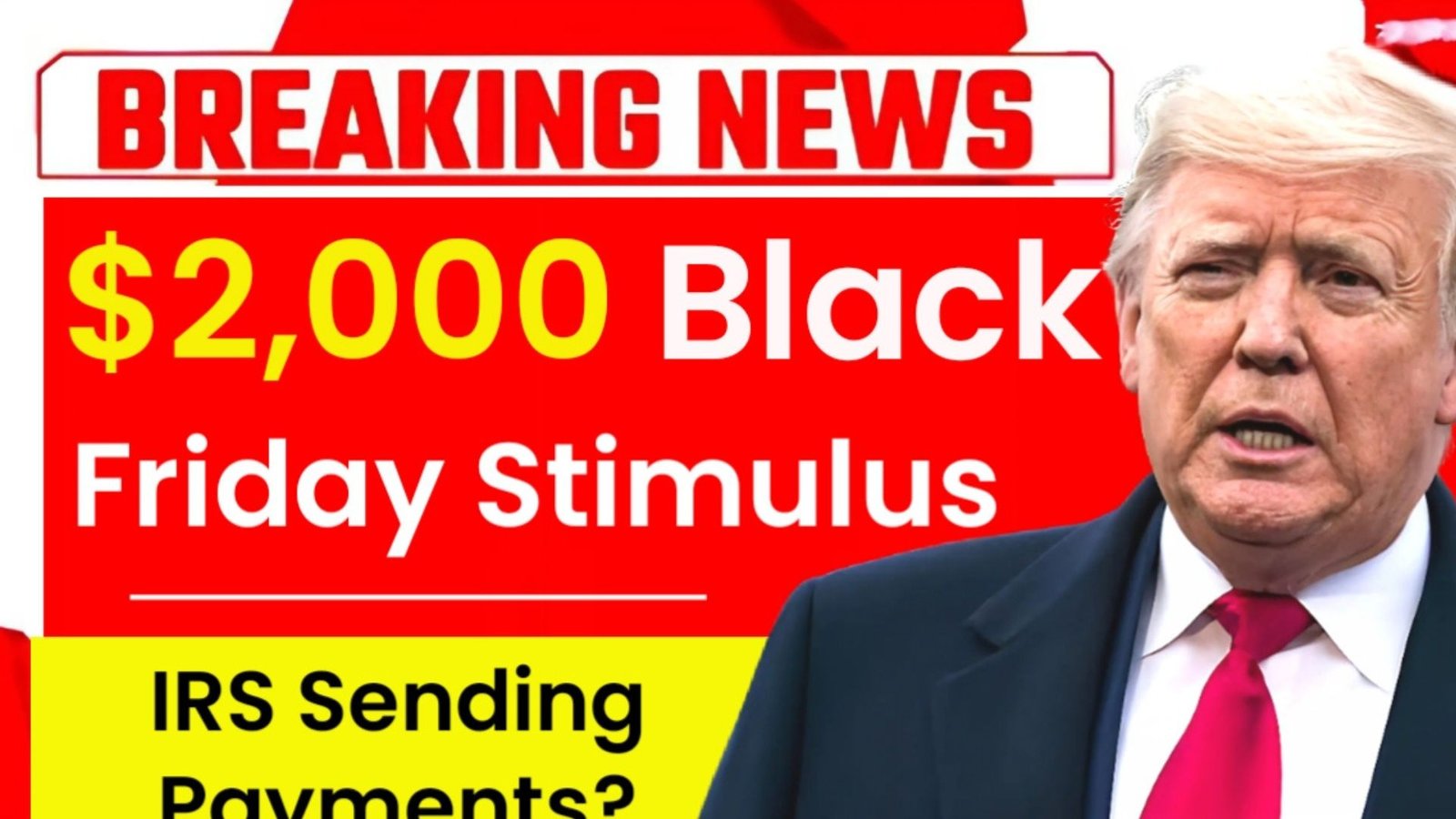
As Black Friday sales light up stores and online deals flood inboxes on November 28, 2025, a viral whisper about $2,000 “holiday stimulus” payments from the IRS has folks buzzing. Shared wildly on social media, this tale promises quick cash to boost shopping sprees or cover winter bills amid 3-4% price jumps on gifts and groceries. But hold the cart—is it legit, or just festive fool’s gold? Spoiler: It’s a hoax rooted in misunderstandings of old policy ideas, not real relief. If you’re eyeing “IRS $2000 Black Friday stimulus 2025,” “is holiday payment real,” or “Black Friday IRS check scam alert,” this no-BS guide clears the air.
We’ll ditch confusing lingo like “congressional authorization” (just lawmakers greenlighting a spending plan) for straight talk, so you can spot fakes, protect your info, and focus on true money-savers. With scammers circling like holiday elves gone rogue, knowing the truth keeps your wallet—and peace—intact this season.
The $2,000 Black Friday Stimulus Claim: Where It Started and Why It’s Buzzing
This rumor kicked off from garbled takes on a “tariff dividend” pitch—basically, a suggestion to share import taxes (fees on foreign goods) back with families to offset higher prices. Floated in political chats, it’s not a done deal; no bill passed, no funds set aside. Social posts twisted it into an IRS “Black Friday bonus,” claiming $2,000 drops for shoppers or low earners to “stimulate” spending. Reality? The IRS flat-out says no such program exists for late 2025. No budget line, no rollout plan—just hype chasing holiday desperation.
Spotting the Holiday Hook
Timing’s no accident: Black Friday’s chaos amps up the appeal, promising cash for Cyber Monday hauls or December dues. But experts call it classic bait—echoing 2020-2021 real checks, when billions flew out during crises. Today? No emergency, no action. The agency stresses: Without a law from Congress, they can’t cut checks. This fake news preys on stretched budgets, where average holiday tabs hit $900 per family, per recent polls. Stay sharp: Real aid announces via news, not DMs.
Is the IRS Really Sending $2,000 Holiday Payments? The Hard Facts
Short answer: Nope. The IRS, the tax-collecting arm of the government, handles refunds and credits but only what’s legally backed. This “stimulus” lacks that stamp—no eligibility lists, no forms, nothing. It’s a mashup of wishful thinking and old tariff talk, not policy. Official word: Check IRS.gov for zero mentions; they’d blast it everywhere if real.
No Green Light from Lawmakers
Congress holds the purse strings—any payout needs their vote and presidential nod. As of December 3, 2025, zilch on this. Past rounds? Sure, like 2021’s $1,400 hits, but those had crisis backing and clear rules. Here? Smoke and mirrors. The Treasury (money overseers) echoes: No holiday handouts brewing. If whispers turn to roars post-election, maybe 2026—but for now, zip.
Scam Dangers: How Fraudsters Cash In on the Rumor
This myth’s a scammer’s dream, spawning phony sites and texts yelling “Claim your $2,000 now!” They snag SSNs, bank details, or “fees” via urgent links. Red flags? Typos, unknown senders, or “limited time” pressure. The IRS warns: They never ask for upfront cash or cold-call for info—real contact’s mailed or via secure portals.
Common Traps to Dodge This Holiday
- Fake Portals: Sites mimicking IRS.gov with “apply here” buttons—lead to data theft.
- Phishing Texts/Emails: “Your Black Friday check awaits—click to verify.” Nope; delete.
- Social Shares: Viral posts with “insider tips”—often bot-driven for clicks.
FTC reports a 20% scam spike in November; losses top $100 million yearly from tax cons. Pro move: Forward suspects to phishing@irs.gov. Real IRS? Blue eagle logo, .gov end, no drama.
For a quick scam-spotter table (pulled from agency tips—bookmark it):
| Warning Sign | Why It’s a Scam | What to Do Instead |
|---|---|---|
| Unsolicited call/text for info | IRS doesn’t initiate contact | Hang up; report to FTC.gov |
| “Pay fee to unlock payment” | Legit aid’s free | Block sender; check IRS.gov |
| Urgent deadline (e.g., today) | Builds panic for quick clicks | Pause; verify via official app |
| Poor grammar/spelling | Pro agencies proofread | Ignore; use myIRS account |
| Promises without proof | No real program exists | Search news on trusted sites |
This grid arms you against festive fraud, saving headaches and hundreds.
How to Verify Any Future Stimulus Claims: Smart Steps Forward
Curious about real relief? Skip rumors—hit official hubs. Create a free IRS account at IRS.gov for personalized alerts; it’ll flag legit refunds or credits (like unclaimed 2021 aid, still worth $1,400+ for some). For holidays, eye state rebates—Colorado’s TABOR or Alaska’s PFD are real, not federal fantasies.
Prep Your Wallet for True Wins
- File Taxes Right: 2024 returns unlock future credits—e-file by April 2026.
- Track Refunds: Use “Where’s My Refund?” tool for pending cash.
- Budget Black Friday: Hunt deals via retailer apps, not “stimulus” myths.
- Report Fakes: Help others—tip off IRS or local news.
These habits turn doubt into dollars, no matter the season.
Wrapping Up: Skip the $2,000 Black Friday Myth and Shop Scam-Free This Holiday
The $2,000 Black Friday stimulus rumor for 2025 is pure fiction—no IRS holiday checks, just scammer bait born from tariff talk without congressional backing. By fact-checking the hype, decoding “phishing schemes” (tricky info grabs) and arming you with verification tools, this guide shields your savings from festive fraud while spotlighting real aids like tax credits. In a world of rising tabs—holidays up 5% on average—focus on verified wins: Smart filing, state perks, and deal-hunting sans drama. Your best “stimulus”? Knowledge that keeps cash in your pocket, not crooks’. Dive into IRS.gov today: Set alerts, report phonies, and celebrate wisely. For fresh “2025 IRS stimulus updates,” official sites rule—happy, hoax-free holidays await.