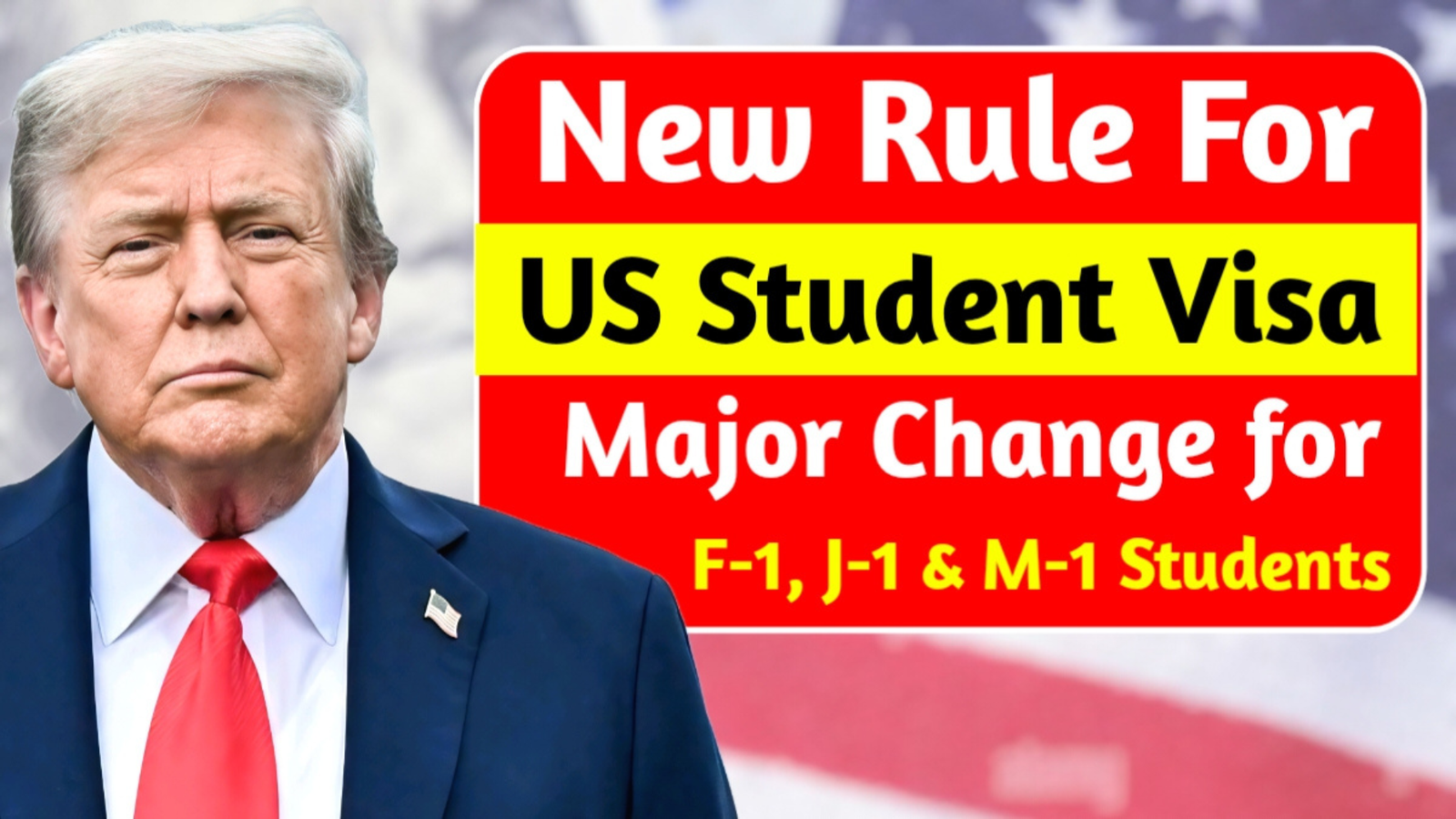
As the Trump administration ramps up its focus on immigration reform in late 2025, a groundbreaking proposal is shaking up the world of US student visas. Announced through the Department of Homeland Security’s regulatory agenda in mid-November, these new student visa rules introduce stricter limits and enhanced vetting for F-1, J-1, and M-1 visa holders, aiming to curb what officials call “visa abuse” while prioritizing national security.
If you’re an aspiring international student eyeing American universities, or a parent planning your child’s education abroad, understanding these Trump student visa changes is crucial. In this comprehensive guide, we’ll dive into the details of the 2025 F-1 visa changes, explore eligibility shifts for J-1 exchange visitors, and unpack the implications for M-1 vocational students. Stay ahead of the curve with our latest update on US student visa rules—because in today’s fast-evolving immigration landscape, knowledge is your best visa.
Understanding the Trump Student Visa Overhaul
The core of these new rules for US student visas revolves around replacing the longstanding “duration of status” provision with fixed-time admissions. For decades, F-1 students—those pursuing academic degrees at US colleges—have enjoyed indefinite stays tied to their program length, allowing flexibility for extensions without constant reapplication. But under the proposed Trump administration visa reforms, this perk is on the chopping block.
The DHS proposal, first floated in August 2025 and now advancing toward finalization, caps initial stays at up to four years for most F-1, J-1, and M-1 students, regardless of program duration. J-1 visas, popular for cultural exchanges, research scholars, and au pairs, would face similar timelines, while M-1 vocational students—think culinary or technical training—might see even shorter limits aligned with hands-on programs. Trump framed this as a “common-sense fix” to prevent long-term overstays, citing data showing over 2,100 F-1 holders from 2000-2010 still active in 2025.
Why now? With international student numbers surging to 1.6 million in 2023, the administration argues these 2025 student visa changes will boost compliance and free up resources for genuine talent. Yet, critics from higher ed groups warn it could disrupt academic continuity, especially for PhD candidates or those switching fields.
Key Changes to F-1 Visa Rules in 2025
The F-1 visa changes are the headline of this overhaul, targeting the backbone of US higher education’s global appeal. Here’s how they’re reshaping your path to studying in America:
- Fixed Admission Periods: No more open-ended “duration of status.” Initial entry for F-1 students will be limited to the program’s expected length, capped at four years. Need more time? File for an extension with USCIS, facing fresh vetting each round.
- Stricter Transfer and Program Switches: Changing schools or majors? Expect heightened scrutiny. The rules mandate detailed justifications, potentially delaying approvals and risking status lapses— a nightmare for undecided undergrads or grad students pivoting to STEM.
- OPT and Post-Grad Work Curbs: Optional Practical Training (OPT), the bridge to H-1B jobs, could be slashed or restricted. Recent whispers from DHS insiders suggest halving timelines, pressuring F-1 visa holders to secure employment faster amid a competitive job market.
- Enhanced Reporting Requirements: Quarterly check-ins via SEVIS updates, plus social media reviews for “national security risks,” will keep international students on F-1 visas under a tighter leash.
These tweaks aim to streamline US student visa eligibility, but they could spike application denial rates by 20-30%, per early estimates from immigration experts.
Impacts on J-1 Exchange Visitors and M-1 Vocational Students
It’s not just academics feeling the squeeze—the J-1 visa changes and M-1 student visa rules are getting a makeover too, broadening the Trump student visa overhaul‘s reach.
For J-1 visa holders, think au pairs, researchers, or summer interns: The four-year cap applies, but with added hurdles for two-year home residency requirements in some cases. Scholars on sabbaticals might need to reapply mid-project, disrupting collaborations that fuel US innovation. Vocational M-1 students, often in short-term programs like flight training or hospitality, face program-specific limits—potentially as low as one year—plus bans on academic credits transferring to F-1 status.
Combined, these new J-1 and M-1 visa rules could deter 100,000+ applicants annually, hitting exchange programs and trade schools hardest. Travel bans layered on top—now covering 19 countries like Iran and Venezuela—further complicate entry for J-1 exchange students from restricted nations.
Who Stays Eligible Under the New US Student Visa Rules?
Navigating student visa eligibility 2025? The basics remain: acceptance to a SEVP-approved school, proof of funds, and intent to return home. But the Trump visa changes add layers:
- Priority for High-Skill Fields: STEM majors might snag longer extensions, aligning with H-1B wage-based lotteries.
- Country-Specific Restrictions: Nationals from high-risk countries face extra interviews or outright bans, shrinking the applicant pool from Asia and Africa.
- No Grandfathering for Current Holders: Existing F-1, J-1, or M-1 students get a grace period to adjust, but renewals will follow the new caps—plan your timeline now.
Immigration attorneys urge early DS-160 filings to beat backlogs, as processing times could balloon to 6-9 months.
Potential Challenges and Economic Ripple Effects
While the administration touts these new rules for international students as fraud-busters, the downsides are stark. Universities, reliant on $40 billion in tuition from abroad, brace for enrollment drops—especially in public institutions and grad programs. A 50% dip in Indian F-1 arrivals this July alone signals trouble.
For students, the stress is real: Mid-program extensions could derail theses, while OPT limits crimp job hunts, pushing talent to Canada or Australia. Economists predict a $10-15 billion hit to US GDP from lost innovation, as international alumni—founders of 55% of billion-dollar startups—look elsewhere.
Legal challenges loom too; higher ed coalitions are gearing up for lawsuits, echoing 2020’s blocked bans.
How to Prepare for the 2025 Student Visa Changes
Don’t let these Trump administration student visa reforms catch you off guard. Here’s your action plan:
- Apply Early and Document Thoroughly: Secure I-20 forms ASAP and prep for biometrics—delays are the new normal.
- Explore Alternatives: Eye O-1 visas for exceptional talent or build H-1B-ready resumes from day one.
- Consult Experts: Partner with certified advisors; free resources like NAFSA can guide F-1 visa applications.
- Monitor Updates: Track DHS agendas and Federal Register notices for final rule drops, expected by Q1 2026.
FAQs on US student visa changes 2025:
- Will this affect my current visa? Extensions yes, but initial stamps might need reissuance abroad.
- Can I appeal denials? Yes, via USCIS, but success rates hover at 30%.
- What about dependents? F-2/J-2 rules align, with similar caps.
Wrapping Up: Navigating the Future of US Student Visas
The new rule for US student visas under Trump signals a tougher era for F-1, J-1, and M-1 students, blending security with streamlined enforcement—but at the cost of flexibility and accessibility. As 2025 international student visa updates unfold, proactive planning will separate those who adapt from those left behind. Whether you’re dreaming of Ivy League lectures or Silicon Valley internships, these major changes to student visas underscore the need for agility in global education.
Share your thoughts on these Trump student visa changes in the comments—have they altered your study abroad plans? For personalized advice, consult official sources like USCIS.gov.
FAQs
Q: When do the new student visa rules start?
A: Not final yet — expected early 2026 (Q1–Q2).
Q: Does “duration of status” end for everyone?
A: Yes, it will be replaced with fixed admission periods (max 4 years for most F-1/J-1).
Q: Will current F-1 students lose their status?
A: No, current students are grandfathered until they need an extension or travel/re-enter.
Q: Can I still get a 5-7 year PhD done on F-1?
A: Yes, but you’ll need to file extensions with USCIS after the initial 4-year cap.
Q: Is OPT being cut or canceled?
A: Not canceled, but shorter durations and stricter approval are proposed.
Q: Are J-1 au pairs and camp counselors affected?
A: Yes — most J-1 categories will get fixed end dates instead of program-based flexibility.